
Creative Cultures: Gloucestershire's Cultural Sector
A three-day programme that gave staff from seven cultural organisations the tools, the time and the courage to embed creativity and care in how their workplaces actually run.
The brief: Equipping South West cultural teams
Cultural organisations make creativity for other people all day. Turning it on themselves is harder. Small teams, stretched budgets and back-to-back delivery leave almost no protected time to ask how a workplace really works: how people talk to each other, give feedback, set boundaries, decide who's in the room.
A network of south-west cultural organisations - Super Culture, GL4, Trigger, Gloucester Culture Trust, Circomedia, Gloucester City Council and Diverse City - asked us to design a pilot that would help their staff understand their own organisational cultures, build practical skills for changing them, and do it in a way that strengthened the local sector rather than each organisation in isolation.
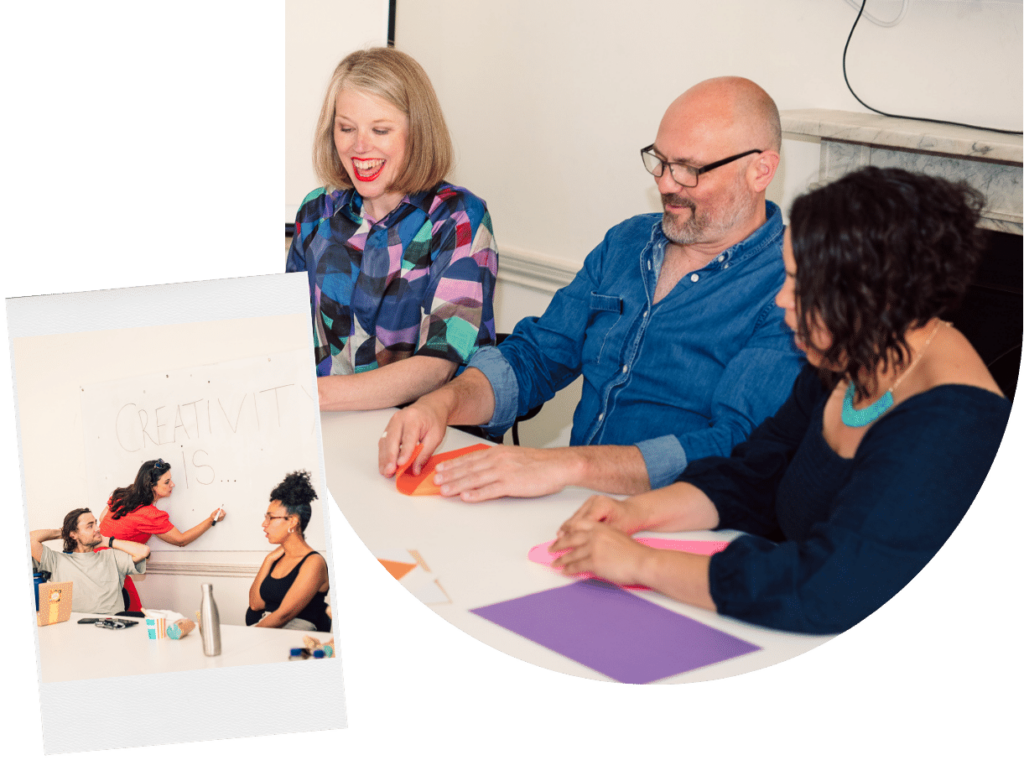
What we did: Three full-day workshops
We framed workplace culture as something lived, made of behaviours, values, relationships and everyday decisions, and treated creativity as both a mindset and a method for changing it. Three full-day workshops moved from benchmarking to action:
Day 1: Benchmarking, playing, inspiring
Where are we now? Self-portraits, group storytelling and word-making to build trust fast; personal and organisational values; hopes and fears; a shared definition of workplace culture and tools for benchmarking it. And one question that stayed with people all programme: who is not in the room?
Day 2: Creativity for innovation and communication
How do we talk to each other? Creative sprints and idea generation; where do you fall between courage and consideration; saying ‘no’ well; skilful feedback models, practised rather than presented.
Day 3: Creativity for culture change
What are we going to do? Culture mapping of strengths, priorities and quick wins; embodied approaches to courageous communication; individual and organisational culture change manifestos; and mechanisms for the cohort to keep supporting each other afterwards.
What changed
Participants left with concrete plans: creative staff check-ins, redesigned away-days, more inclusive internal meetings, new internal processes, and culture change manifestos for their organisations. Several reported relationships across Gloucester's cultural sector improving as a direct result of the cohort.
The evaluation found that creative methods were what made the difficult conversations possible. Making, mapping and storytelling lowered defensiveness around culture, let people express things they had struggled to articulate, built trust across organisations quickly, and turned reflection into action planning.
What people said
"It helped me say things I've never said out loud."
- Participant"The time and space to reflect on and reframe my approach to workplace relationships and problem-solving has been incredible."
- Participant"The leading of the sessions was done with a huge amount of care and great modelling."
- Participant
Want to work together?
Say hello, and let's have an chat about how we can work together to spark creativity in your space.
Contact: [email protected]